
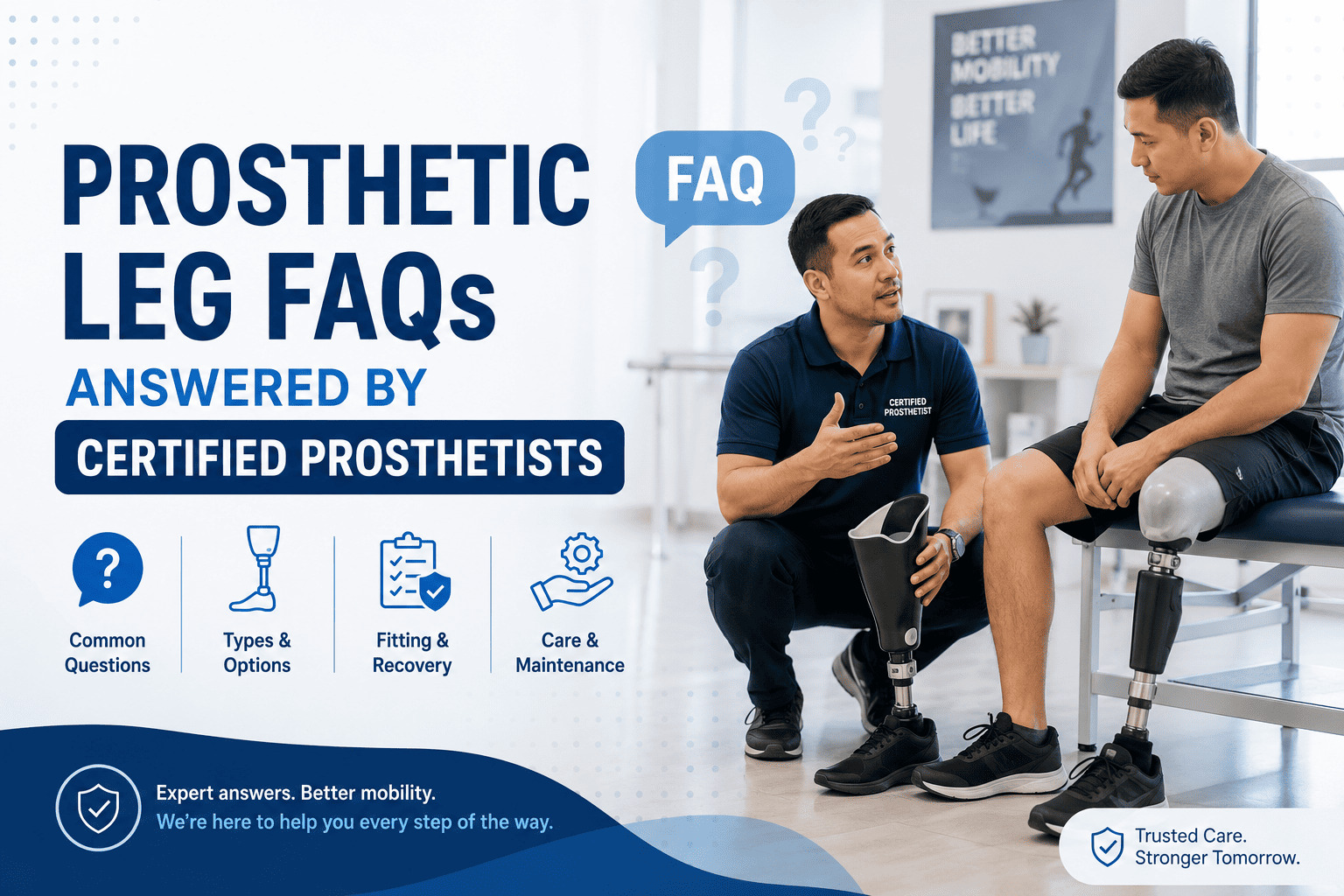

Choosing a prosthetic leg is a life-changing decision. Whether you have recently undergone an amputation or are supporting a loved one through recovery, it’s natural to have many questions. Understanding how prosthetic legs work, the fitting process, costs, maintenance, and rehabilitation can help you make informed decisions and regain confidence.
At Artalive Sdn Bhd, a trusted prosthetic & orthotic center in Malaysia, our certified prosthetists work closely with every patient to provide personalized solutions that restore mobility and improve quality of life. In this guide, we answer the most frequently asked prosthetic leg FAQs to help you begin your journey with confidence.
What Is a Prosthetic Leg?
A prosthetic leg is an artificial limb designed to replace a missing lower limb caused by injury, illness, congenital conditions, or diabetes. Modern lower limb prosthetics are lightweight, durable, and customized to match each individual’s lifestyle, activity level, and physical needs.
Depending on the level of amputation, prosthetic legs may include:
Below-knee prosthesis(Transtibial)- Above-knee (Transfemoral) prosthesis
- Hip disarticulation prosthesis
- Partial foot prosthesis
Each prosthesis is carefully designed to improve balance, walking ability, and independence.
FAQ 1: When Can I Get a Prosthetic Leg After Amputation?
Most patients can begin the prosthetic fitting process once the residual limb has healed and swelling has reduced. This typically takes between 6 and 12 weeks, although recovery varies depending on:
- Overall health
- Type of amputation
- Healing speed
- Medical conditions such as diabetes
- Doctor’s recommendation
Your rehabilitation team and certified prosthetist will determine the ideal time to begin your prosthetic rehabilitation program.
FAQ 2: How Is a Prosthetic Leg Fitted?
A proper prosthetic leg fitting is essential for comfort and mobility.
The fitting process generally includes:
Initial Assessment
Your prosthetist evaluates:
- Residual limb condition
- Muscle strength
- Walking goals
- Lifestyle
- Occupation
- Activity level
Limb Measurement
Digital scans or plaster casting may be used to create an accurate model of your residual limb.
Socket Design
The socket is the most important part of a prosthetic leg because it connects your body to the prosthesis. A comfortable socket reduces pressure and improves control.
Trial Walking
Adjustments are made while you practice walking to achieve proper alignment and balance.
Final Prosthesis Delivery
Once the fit is comfortable, your custom prosthetic leg is completed and paired with rehabilitation training.
FAQ 3: What Types of Prosthetic Legs Are Available?
Today’s prosthetic technology offers many options depending on lifestyle and mobility goals.
Common types include:
Mechanical Prosthetic Legs
Reliable, durable, and suitable for everyday walking.
Microprocessor-Controlled Prosthetic Legs
These advanced prostheses use sensors to improve balance, walking efficiency, and safety on different terrains.
Sports Prosthetics
Designed for running, hiking, and athletic activities.
Waterproof Prosthetic Legs
Suitable for swimming, showering, and water-based activities.
Your certified prosthetist will recommend the best custom prosthetic leg based on your daily needs.
FAQ 4: How Long Does It Take to Learn Walking?
Learning to walk with a prosthetic leg is different for everyone.
Many people begin standing and walking within a few weeks after receiving their prosthesis. Full adaptation may take several months with consistent rehabilitation.
Success depends on:
- Physical therapy
- Balance exercises
- Muscle strength
- Prosthetic fit
- Motivation
- Regular follow-up appointments
Most patients gradually regain confidence through structured prosthetic rehabilitation.
FAQ 5: Will Wearing a Prosthetic Leg Be Painful?
A properly fitted prosthetic leg should not cause ongoing pain.
Initially, some soreness is normal while your body adapts. However, persistent discomfort may indicate:
- Socket fit issues
- Skin irritation
- Pressure points
- Alignment problems
Regular follow-up visits with your prosthetist help ensure the prosthesis remains comfortable as your residual limb changes over time.
FAQ 6: How Much Does a Prosthetic Leg Cost in Malaysia?
One of the most common prosthetic leg questions concerns pricing.
The prosthetic leg cost Malaysia varies depending on several factors, including:
- Type of prosthetic leg
- Level of amputation
- Socket technology
- Foot components
- Knee system
- Microprocessor features
- Customization requirements
Rather than choosing solely based on price, focus on long-term comfort, durability, and functionality. A certified prosthetist can recommend the most suitable solution within your budget.
FAQ 7: How Do I Maintain My Prosthetic Leg?
Proper prosthetic leg maintenance extends the life of your device and improves comfort.
Follow these maintenance tips:
- Clean the socket daily with mild soap.
- Wash prosthetic liners regularly.
- Inspect straps and components for wear.
- Keep moving parts dry unless waterproof.
- Replace worn sleeves or liners when needed.
- Schedule routine professional inspections.
Never attempt major repairs yourself. Always consult your prosthetist for adjustments or replacements.
FAQ 8: Can I Drive with a Prosthetic Leg?
Many individuals can safely return to driving after rehabilitation.
Eligibility depends on:
- Side of amputation
- Vehicle type
- Doctor’s approval
- Driving assessment
Some people may require vehicle modifications, while others can drive without changes after proper training.
FAQ 9: Can I Exercise and Play Sports?
Absolutely.
Modern prosthetic technology allows users to enjoy:
- Walking
- Cycling
- Swimming
- Hiking
- Golf
- Gym workouts
- Running
- Recreational sports
Your prosthetist can recommend specialized prosthetic components designed for active lifestyles.
FAQ 10: How Often Should My Prosthetic Leg Be Replaced?
A prosthetic leg does not last forever.
Most components last between 3 and 5 years, although this depends on:
- Daily usage
- Activity level
- Weight changes
- Wear and tear
- Technological upgrades
Children typically require more frequent replacements because they continue to grow.
Routine reviews help determine when adjustments or replacements are needed.
Why Choose a Certified Prosthetist?
Working with a certified prosthetist offers significant advantages.
Certified professionals provide:
- Accurate assessment
- Personalized prosthetic design
- Proper socket fitting
- Ongoing adjustments
- Rehabilitation support
- Long-term follow-up care
Choosing a qualified specialist reduces complications and improves mobility outcomes.
At Artalive Sdn Bhd, every patient receives individualized care designed to restore independence through advanced prosthetics and orthotics Malaysia services.
Your Journey Doesn’t End with the Prosthetic
Receiving a prosthetic leg is only the beginning.
Successful recovery also includes:
- Regular physiotherapy
- Strength training
- Balance exercises
- Healthy nutrition
- Skin care
- Routine prosthetic maintenance
- Continuous follow-up appointments
With expert guidance, many people return to work, travel, exercise, and enjoy active lifestyles once again.
Conclusion
Understanding the answers to these prosthetic leg FAQs helps reduce uncertainty and prepares you for the journey ahead. From choosing the right prosthetic leg and understanding the fitting process to learning about maintenance, rehabilitation, and long-term care, working with experienced professionals makes all the difference.
If you’re looking for a trusted prosthetic & orthotic center in Malaysia, Artalive Sdn Bhd offers comprehensive assessments, customized lower limb prosthetics, and ongoing rehabilitation support tailored to your individual needs. Our certified prosthetists are committed to helping every patient achieve greater mobility, comfort, and independence with confidence.
Frequently Asked Questions
1. How long does it take to get fitted for a prosthetic leg?
The fitting process usually takes several appointments over a few weeks, depending on healing, limb changes, and the level of customization required.
2. How often should I visit my prosthetist after receiving a prosthetic leg?
Most patients benefit from follow-up visits every 3 to 6 months, or sooner if they experience discomfort, skin irritation, or changes in their residual limb.
3. Can a prosthetic leg be customized for my lifestyle?
Yes. A custom prosthetic leg can be tailored for daily walking, work, sports, hiking, or other activities based on your mobility goals and recommendations from your certified prosthetist.